
In the last three years, I've gotten calls about seven dogs I bred who are now between ten and thirteen years old. Some calls were happy — the family wanted to send photos, to let me know their dog was still going strong. Some were hard. Two were dogs who were declining and whose families wanted someone who understood the dog's history to be part of the conversation about what came next. One was a family dealing with a health crisis who felt alone in it and didn't know where to turn.
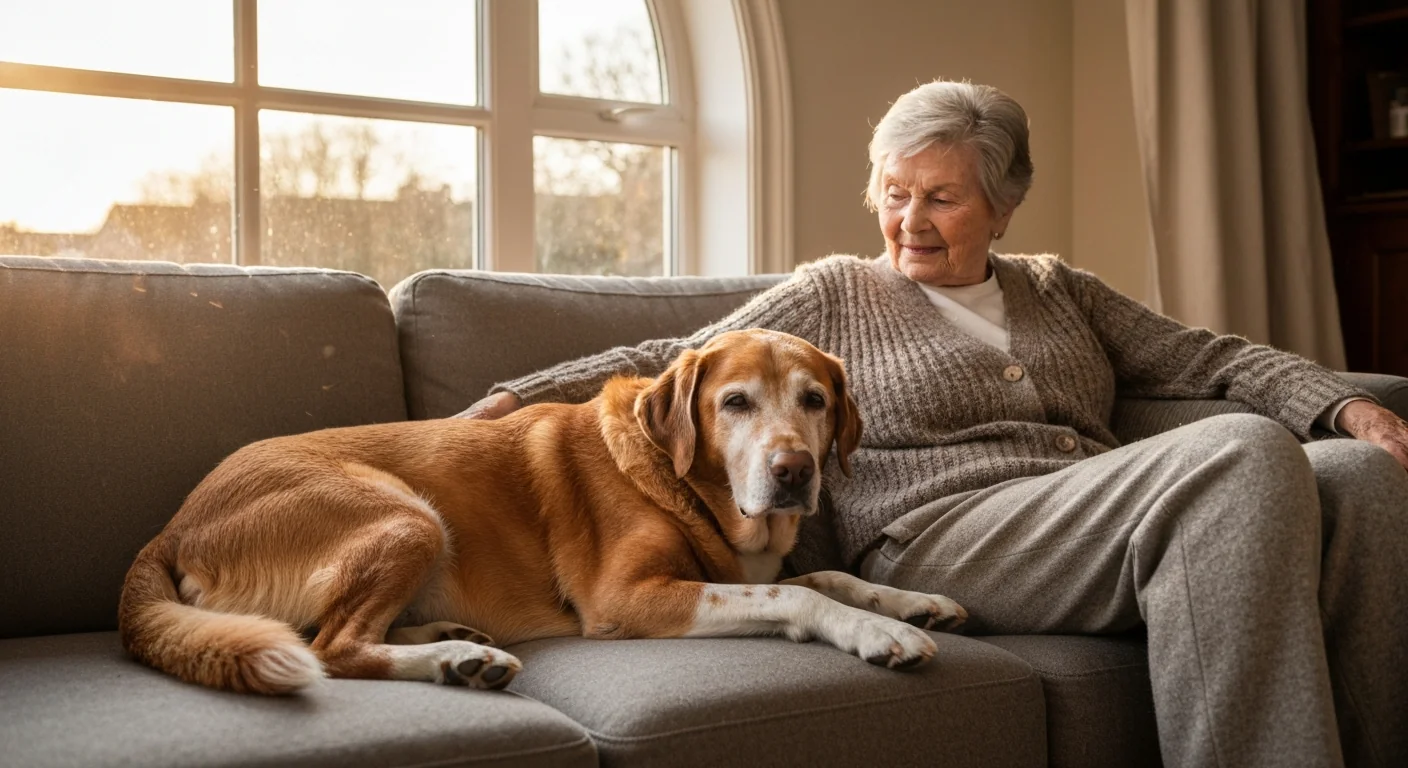
The dogs I bred are my responsibility for their entire lives. Not legally, in most cases. But genuinely. When I matched a puppy to a family, I made an implicit promise that extended beyond housetraining advice and puppy shots. I promised to be available for the duration.
Most breeders don’t talk about this publicly. The marketing focus is on puppies, on litters, on what’s available now. The ongoing responsibility to dogs already placed rarely makes it into breed club discussions or social media posts. It should.
The Phone Calls That Come Fifteen Years Later
The call that opened my thinking on this most directly came in the winter of 2022. A family I’d placed a puppy with in 2010 called to tell me their dog had been diagnosed with degenerative myelopathy and was declining. They’d been managing it for two years and had questions I was better positioned to answer than their vet, not about medicine, but about the dog’s specific background, his line, whether I’d seen anything similar in his siblings or cousins, whether any of his littermates had faced the same thing.
I had the records to answer those questions. I’d tracked that litter. I knew the health histories of five of his seven littermates. I was able to tell them what I knew, what I didn’t know, and what I’d observed in related dogs. That conversation mattered to them in a way that went beyond information transfer. They needed to feel that someone who’d known this dog from before birth was part of what they were carrying.
What Records Made Possible
I've kept records on every dog I've bred since my first litter. When families call about senior dogs, I can pull up the litter chart, see birth weight, note anything unusual at whelping, trace the line they came from. For families managing end-of-life decisions, having a breeder who can answer "has anyone else in the line had this?" is genuinely helpful. The records I keep aren't just for my breeding decisions. They're for the families.
The Senior Dog Relinquishment Problem
Some families who’ve done everything right for a decade find themselves unable to provide appropriate care for an aging dog. A senior dog with complex medical needs, at a time when the family has its own health challenges or financial pressures, can create an impossible situation.
My contract requires that any dog I’ve bred be returned to me rather than relinquished to a rescue or sold. This applies at every age, including seniors. The commitment to take back dogs doesn’t expire when the dog turns eight or develops a health condition.
Senior dog returns are different from puppy or young dog returns. A ten-year-old dog has a decade of attachment to a family, a home, a routine. Relinquishment at that age is genuinely traumatic for the dog in a way that early relinquishment is not. I take this seriously when I place senior dogs who’ve come back to me.
What I’ve found is that senior dogs who come back to a breeder who knows them, who has their history, who handles them with some familiarity with their preferences and needs, often adjust better than the same dog placed into an unfamiliar rescue environment. The relationship between a breeder and their alumni dogs doesn’t evaporate simply because those dogs left the property.
Following Health Into Old Age
The data that matters most for improving a breeding program is longitudinal. Which dogs are still active at nine? Which dogs developed joint problems by seven? Which lines tend toward cardiac issues in old age? Which temperament patterns hold up under the pressures of senior years?
I contact every buyer whose dog reaches age seven with a request for a health update. Not everyone responds. Those who do give me information I can’t get any other way. The pattern of what I’m seeing in older dogs from specific pairings tells me things that puppy evaluations and early health screenings cannot.
How that information shapes my breeding decisions is one of the things that distinguishes a breeder who genuinely tracks outcomes from one who considers a puppy’s health history their problem once the check clears.
What Families of Aging Dogs Actually Need
Most families don’t need a breeder to manage their senior dog’s health for them. They have veterinarians for that. What they sometimes need is something harder to find: a breeder who knew their dog before birth, who can provide context that a vet can’t, who takes a call about a dog that’s been in another home for twelve years with genuine care.
Here’s what I try to provide when families of senior alumni reach out:
- Honest information about health patterns in the dog’s line
- Context about the dog’s early life and temperament that might be relevant to current challenges
- Referrals to specialists if the family’s vet doesn’t have the relevant expertise
- Willingness to discuss end-of-life decisions honestly, without judgment
That last one is important. Euthanasia decisions are among the hardest things dog owners face. Having a breeder who will engage with that conversation honestly, who won’t offer false comfort or pressure families toward either direction, who will simply bear witness to a hard moment, is something I’ve been able to give a handful of families over the years and consider one of the most important things I do.
The Hard Conversations About Declining Quality of Life
The call I dread most is not the call about a health problem. It’s the call where a family is trying to decide whether they’re doing the right thing in letting a dog go, and they want someone who knew the dog to tell them it’s okay.
It is almost always okay. The families who call me in this position have almost invariably loved their dogs well, have tried everything that was reasonable to try, and are asking the question from a place of genuine care for the animal rather than convenience. They need permission to trust themselves.
The phone calls that come from families going through difficulty with dogs I bred are never easy, but the calls about senior dogs carry a weight that’s different from the calls about health problems in younger dogs. There’s no fixing left to do. There’s only accompanying.
Breeding for Longevity
The senior years data I collect feeds directly into my breeding decisions. I track which pairings produce dogs who remain sound and active into double digits. I track which lines seem to age gracefully versus which ones begin declining early. The function-based evaluation approach I shifted to after walking away from conformation has contributed directly to improved longevity in my program, and the data I’m now seeing in dogs I bred under that approach supports that the shift was worth making.
Breeding for longevity requires thinking about what you’re breeding in ways that transcend the dog in front of you and the families currently waiting for puppies. It requires tracking the second half of dogs’ lives, which nobody sees at shows or in puppy photos, and using what you learn to make better decisions the next time around.
Practical Steps for Following Senior Alumni
- Contact buyers when dogs reach age seven with a health update request
- Keep records that allow you to answer questions about a dog's early history
- Make clear to buyers at placement that you're available throughout the dog's life, not just in puppyhood
- Be prepared to take back seniors without conditions
- Track longevity data systematically and use it in breeding decisions