
Draft horses and driving are mostly about the same thing I deal with in my kennel: slow, boring repetition that the animal can predict. A horse that has been taught to stand, to walk on, and to halt on a voice cue will move a load without drama. A horse that has not been taught those three things will find its own answers, and you will not like them.
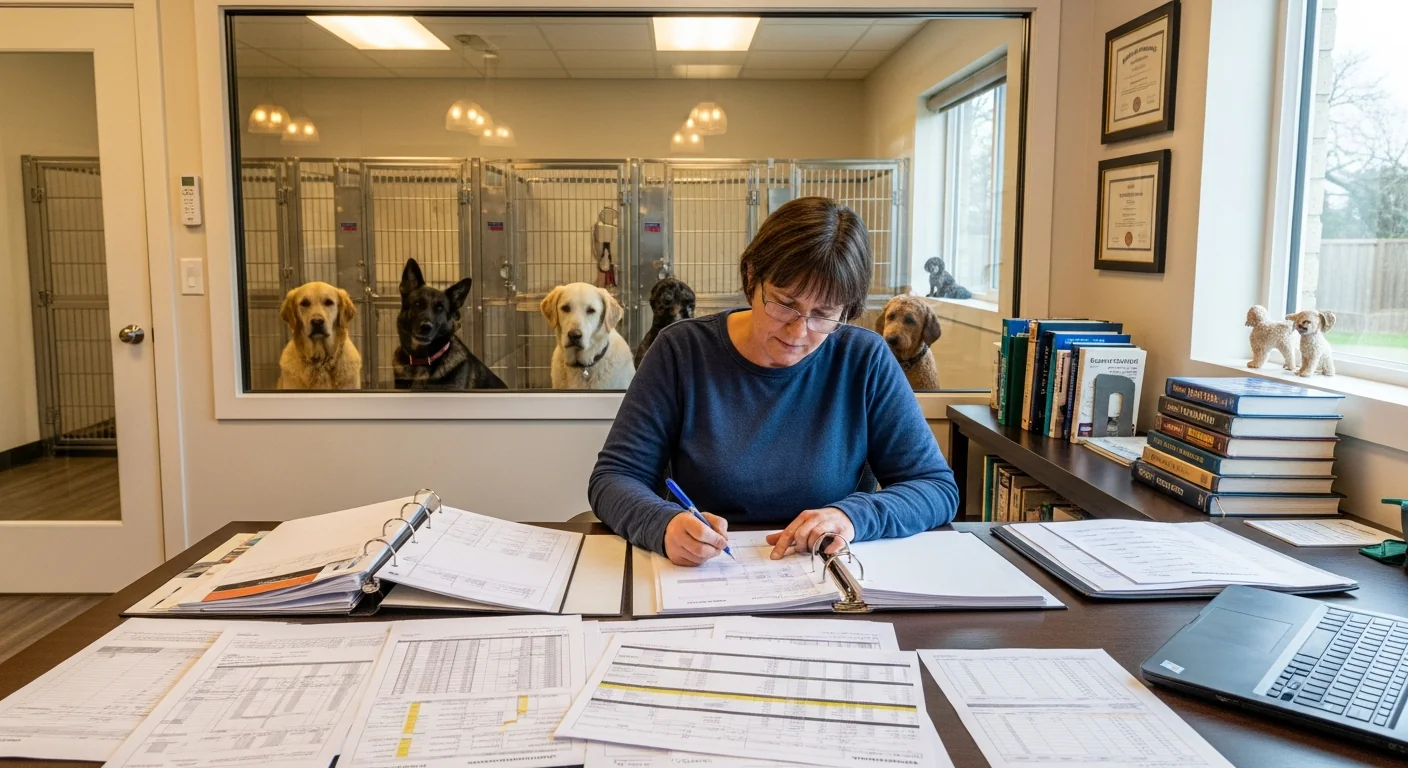
I raise White Swiss Shepherds in Vermont, not draft horses. But I grew up around working horses in the Northeast, and the questions are the same ones I get about dogs: how do you start, what do you feed, how do you know the animal is ready. The difference is that a horse weighs a thousand pounds more than my largest stud, so the margin for guessing is smaller. When I want to check my thinking on training sequence or on reading a pedigree, I use draft horse driving guides rather than forum threads, because a written sequence can be checked against what the animal actually did that day.
Why does ground work come before hitching?
Because the horse has to learn the cues while nothing is attached to it. Ground work is where you establish that a cluck means walk on, that a whoa means stop now, and that standing still is a job the horse can be paid for with rest. If you skip that and go straight to the cart, the horse learns the same cues but with a load amplifying every mistake.
The sequence I was taught, and the one I still see recommended, is this: halter and lead, then long lines, then dragging something soft like a tire or a log, then the cart. Each step takes weeks, not days. A horse that rushes the drag will rush the cart. A horse that stands quietly while a chain rattles behind it will stand quietly at a hitch rail.
What you are looking for is not obedience. You are looking for a horse that can be corrected without becoming frightened. That is the trait that keeps everyone intact.
How do you read a draft pedigree without getting fooled?
You read it the way I read a dog pedigree: for the faults, not the wins. Every draft breed has lines known for a particular shoulder, a particular hock, a particular temperament. A pedigree full of champions tells you the horses could work. It does not tell you whether they would stand for the farrier at eight years old.
What I want on paper is repetition. The same dam line appearing more than once. Siblings that lived long lives. A stallion that was used on mares of different builds and produced usable foals from all of them. That last point matters more than a show record, because a stallion that only crosses well on one type of mare is a stallion you have to plan around.
I also want to see the ages. A pedigree that lists horses who died at six or seven is telling you something, even if the cause is not written down. Draft horses should be working into their late teens. If the line does not do that, the papers are decoration.
What does a working harness fit actually look like?
It looks boring. The collar sits so that you can slide two fingers under the top and the horse can lower its head to the ground without the collar choking it. The hames are adjusted so the traces run level from the singletree to the whippletree. The breeching sits on the horse’s buttocks, not on the tail, and it is snug enough that the horse can hold back a load on a downgrade without the strap riding up.
Most of the problems I have seen with beginners come from a collar that is too small or a harness that is too loose. A collar that pinches will make a quiet horse sour in a week. A loose trace will slap and startle a green horse. Neither problem shows up in a photograph. Both show up in the horse’s ears and in how it stands at the hitch.
Adjust the harness on the horse, standing still, before you ever ask it to pull. Then adjust it again after ten minutes of work, because leather stretches and horses sweat.
How do you prepare a mare for foaling?
With records and a camera, mostly. I do the same thing with my shepherds: I write down the breeding date, I count the days, and I start watching the mare’s udder and her behavior two weeks before the earliest possible date. A mare that is bagging up and waxing is close. A mare that is restless and off her feed is closer.
The foaling stall should be clean, deeply bedded, and boring. No traffic, no dogs, no children. I have seen more foaling problems caused by a well meaning audience than by anything else. If the mare is used to being handled, she will let you check her. If she is not, you have a problem that should have been solved months earlier.
Have the vet’s number on the wall, not in your phone. Have a foaling kit ready: iodine, gloves, a clean towel, a thermometer, and a notebook. Write down the time of birth, the time the foal stood, the time it nursed, and the time the placenta passed. That notebook is worth more than any advice you will get afterward, because it is about your mare, not someone else’s.
What should a beginner look for at a draft horse show?
Look at the horses standing tied. That is where you see temperament. A horse that stands quietly while its handler talks to a neighbor is a horse that has been handled correctly. A horse that weaves, paws, or pins its ears at every passerby is telling you about its life so far.
In the halter classes, watch the judge’s hands. A good judge runs a hand down the shoulder and over the loin, and you can see the horse’s reaction. In the driving classes, watch the turns. A horse that leans into the turn and comes out on the same line is a horse that has been driven, not just shown.
At the pulling contests, ignore the weight. Watch the horse’s feet. A horse that sets its feet and leans into the collar is working. A horse that scrambles is guessing. The difference is training, and it is visible from the rail.
Why I keep records even when nobody asks for them
Because memory is a liar. I have a binder for every dog I have bred: health tests, temperament notes, whelping times, weights. I have the same kind of binder for the horses I have helped with, and it has saved me from repeating a mistake more than once.
When someone asks me whether a particular stallion crosses well on a particular mare line, I do not answer from memory. I go to the binder. When someone asks me how long a foal took to stand, I go to the binder. The answer is usually less interesting than the person hoped, and it is usually correct.
That is the whole method. Write it down, read it back, and change one thing at a time. It works on dogs, and it works on horses, and it works whether you are raising a puppy or starting a four year old draft horse on a stone boat.