
Every week I get messages from puppy buyers who tell me a breeder offered them "fully health-tested" parents. When I ask what tests were done, the answers range from "I don't know, they said they were tested" to a list of procedures that sounds comprehensive but has gaps the size of barn doors. Health testing is not binary. A dog is not simply tested or untested. What was tested, when, and by whom matters enormously.
I’ve been navigating breed health for twenty-five years. I’ve sat on health committees, reviewed pedigrees, and watched the science of canine genetic testing evolve from a handful of markers to comprehensive panels that would have seemed like science fiction when I started. Here is what I actually know about what clearances mean.
What OFA Actually Evaluates
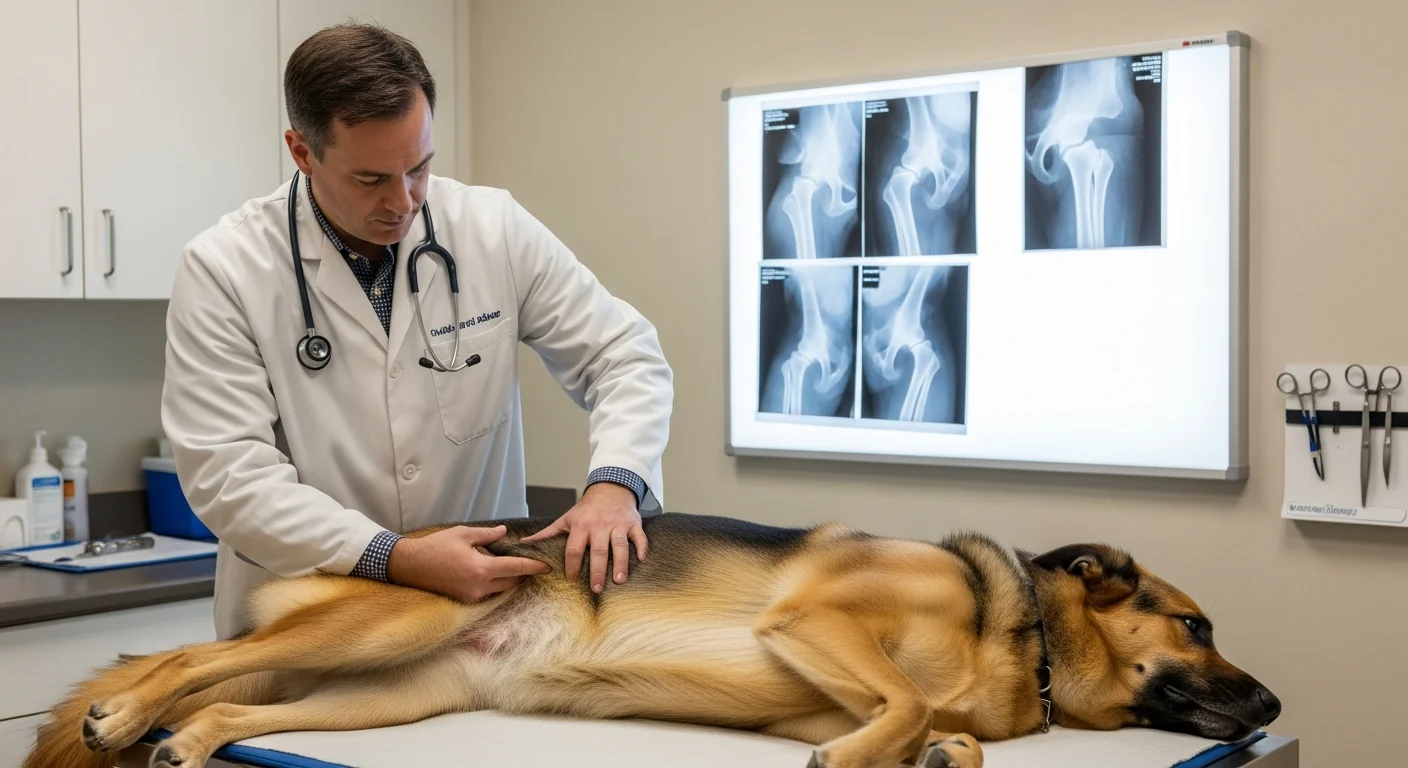
OFA, the Orthopedic Foundation for Animals, evaluates radiographs submitted by veterinarians. For hips, the evaluation is performed on a dog at least two years old, radiographed in a specific standardized position, and graded by three radiologists who do not know the dog’s identity.
The grades are Excellent, Good, Fair, Borderline, Mild Dysplasia, Moderate Dysplasia, and Severe Dysplasia. Dogs rated Excellent, Good, or Fair are eligible for OFA certification. Dogs rated Borderline or worse are not.
What OFA does not tell you:
- Whether a dog with Fair hips will develop pain in old age
- Whether a dog with Excellent hips will pass that hip quality to their offspring
- Anything about the dog’s overall structural soundness beyond the specific joints evaluated
- Whether the dog has already developed other orthopedic issues
I’ve known Excellent-hipped dogs who limped noticeably by age seven and Fair-hipped dogs who were still hiking comfortably at twelve. The score is a data point, not a promise.
The Stud With Perfect Hips
In 2011, I considered a stud dog with OFA Excellent hips. His elbows were clear. He was gorgeous. Then I tracked his offspring through the breed club health database and found that four of his puppies from two different dams had developed significant hip issues by age five. The Excellent score didn't pass to his progeny. His sire's lines told a different story than his own radiograph. I found another stud.
DNA Panel Testing: The Revolution and Its Limits
DNA panel testing has genuinely transformed ethical breeding. The ability to screen dogs for dozens of known genetic mutations before breeding has allowed breeders to make informed decisions that prevent puppies from being born with conditions that cause real suffering.
But panels have limits that are not always communicated clearly.
Panels only test for known variants. Science discovers new mutations regularly. A panel that was comprehensive in 2018 may miss mutations that were identified in 2023. Panels need to be updated as science advances, and the “clear” status on a panel from several years ago may not reflect current knowledge.
Clear does not mean healthy. A dog can be clear on every available genetic test and still develop cancer, autoimmune disease, cardiomyopathy, or any condition that doesn’t have an identified genetic marker yet. DNA panels eliminate known risks. They cannot eliminate unknown ones.
Carrier status is not a disqualification. A dog who carries one copy of a recessive mutation will not be affected by it and can be bred safely to a clear dog without producing affected puppies. Carriers are removed from consideration by breeders who don’t understand genetics. This is often a mistake, especially in breeds with limited gene pools, because eliminating carriers can reduce genetic diversity in ways that create worse problems. The lessons I learned about inbreeding coefficients apply here too, and understanding the difference between carrier status and affected status is central to breeding responsibly within small breed populations.
Eye Certifications: What CERF and OFA Eye Mean
Eye certifications evaluate dogs for a range of hereditary eye conditions including progressive retinal atrophy, cataracts, collie eye anomaly, and others depending on the breed. CAER exams, now conducted under OFA’s eye registry after CERF was absorbed, are performed by board-certified veterinary ophthalmologists.
A critical detail: eye certifications expire. Most are valid for one year. A dog certified clear in 2022 is not necessarily clear today because some eye conditions are progressive and don’t manifest until adulthood or middle age. Current eye certification means the dog was examined within the past twelve months. Historical certification means nothing for current status.
I certify my breeding dogs every year, without exception. If a buyer sees eye clearances dated more than one year ago on a breeder’s dogs, they should ask why.
What “Vet Checked” Means
Almost nothing. “Vet checked” means a veterinarian examined the puppy, usually briefly, and found no obvious acute health issues. It does not mean health tested, does not mean genetically screened, does not mean the puppy’s parents were evaluated for hereditary conditions.
A puppy can be vet checked and still come from two parents with no health clearances. The vet check confirms that the puppy in front of you appears healthy at the moment of the exam. It tells you nothing about what’s in the puppy’s genetic future.
The Language to Watch For
Phrases like "parents are health tested," "genetically tested," "DNA tested," and "vet checked" are frequently used without specifics. Ask the breeder to tell you exactly which tests were completed on each parent, the results, the dates, and the certifying organization. A breeder who can't or won't answer this specifically hasn't done the testing they're implying they did.
What Cardiac Screening Involves
For breeds with known cardiac risks, OFA cardiac clearances require evaluation by a board-certified veterinary cardiologist, not a general practitioner. This matters because cardiac auscultation is a specialized skill, and murmurs that a cardiologist identifies may be missed or mischaracterized in a general practice setting.
Breeds that carry elevated risks for specific cardiac conditions require breed-specific protocols. If you’re acquiring a breed with known cardiac concerns, verify that the cardiac clearance was performed by a cardiologist, not just a vet.
Thyroid and Other Endocrine Testing
Thyroid function is rarely mentioned in breeding discussions but is worth considering for breeds with elevated hypothyroidism rates. OFA maintains a thyroid registry. The testing is simple, inexpensive, and provides useful information about a dog that can influence breeding decisions.
Building a Real Picture of a Dog’s Health
The testing that matters is not just the testing on the individual dog in front of you. It’s the health history of their entire pedigree.
I track health information on every dog I’ve bred. When a family calls me about a problem, I log it, I analyze it against my other litters, and I adjust my breeding decisions accordingly. A stud dog whose offspring are developing a pattern of early-onset issues is disqualified from my program regardless of his own clearances.
This kind of longitudinal tracking is what separates a breeder who health tests because it’s expected from a breeder who health tests because they actually care about outcomes. Any ethical breeder should be able to tell you not just about their current dogs’ clearances but about the health trajectories of dogs they’ve placed over years.
Questions That Reveal Whether Clearances Are Genuine
- What specific tests were done on each parent, with dates and results?
- Are the clearances registered with OFA or another public registry, and can I look them up?
- What is the COI of this litter?
- What health issues have appeared in previous litters from these parents or related lines?
- If something develops in my puppy, how do you want me to communicate that to you?
A breeder who has genuinely done comprehensive health testing will answer these questions without hesitation. A breeder who has not will become evasive, redirect, or give answers so vague they communicate nothing.
The Public Registries Are There For a Reason
- OFA database is publicly searchable at ofa.org
- Search the dog's registered name and verify clearances yourself
- Check dates — expired clearances are not current clearances
- Check both parents, not just one
- Cross-reference the registered name on the OFA entry with the dog's AKC or UKC registration
Health testing is not optional for ethical breeders. But comprehensive testing done honestly and communicated transparently is a different standard than the phrase “health tested” on a website. What I’ve learned about temperament evaluation and what I’ve learned about genetic clearances have both pushed me toward the same conclusion: the only honest approach is the complete one, and anything less is a failure of responsibility to the dogs and to the families who trust you.