
Every placement decision I make affects two lives — the puppy's and the family's — for the next decade or longer. When I get it right, I rarely hear about it. When I get it wrong, I hear about it for years, and I'm involved in cleaning up consequences that usually could have been avoided at eight weeks old. That's why placement is the part of ethical breeding I take most seriously, and the part I've changed my approach to most dramatically over twenty-five years.
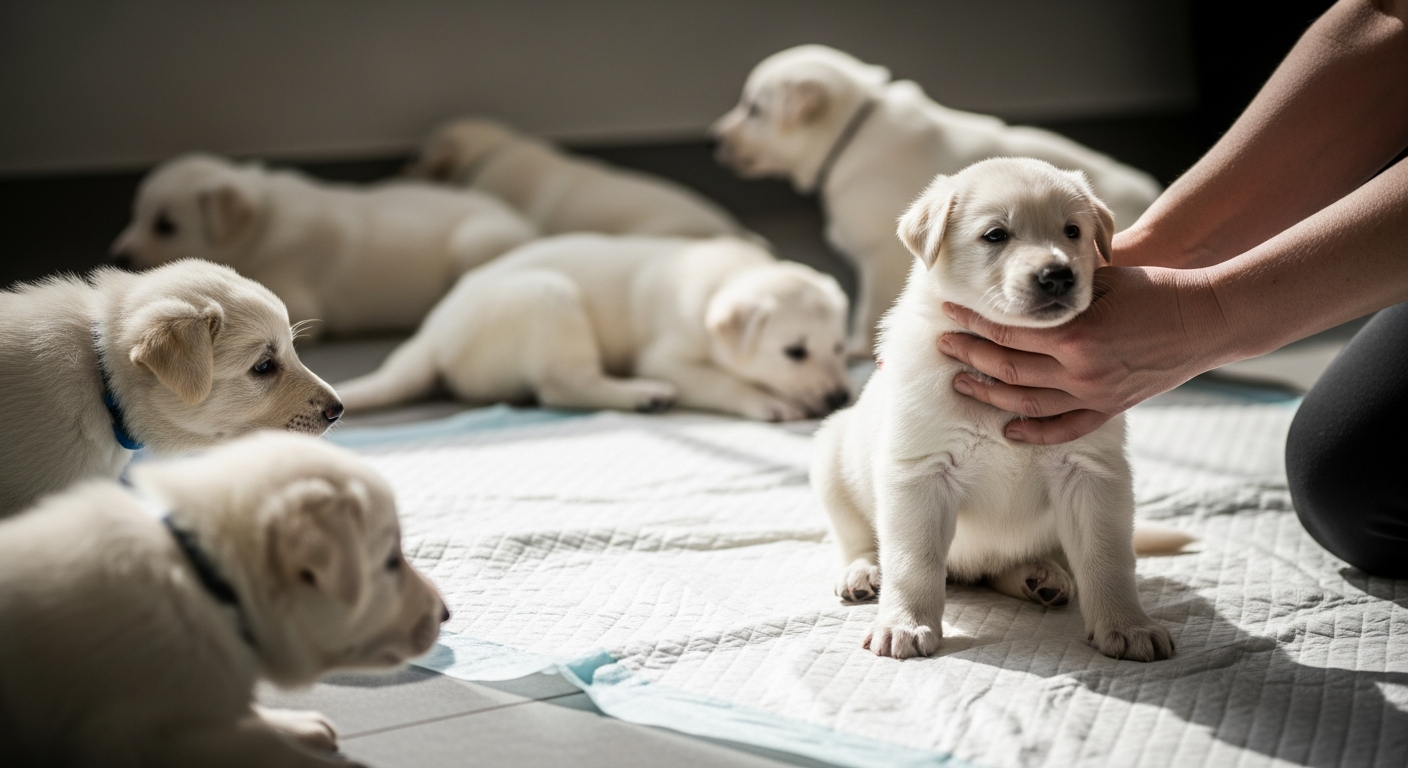
Placement isn’t first-come-first-served. It isn’t alphabetical, and it isn’t about who paid the deposit first. If it were any of those things, I wouldn’t need a framework — I’d need a spreadsheet. The framework exists because puppies in the same litter are different, families have different needs, and the matching matters.
What I Gather Before the Litter Is Born
Long before puppies arrive, I’m building information on the families on my list. My waiting list is not a queue — it’s a group of pre-screened homes that I’ve already decided I’m willing to place with. The screening happens over months, sometimes years. By the time a family is on my list, I know:
- Their home situation: house, yard, fencing, other animals, children’s ages
- Their lifestyle: work schedule, travel frequency, typical activity level
- Their experience: previous dogs, specific experience with the breed, training style
- Their goals: companion, sport, limited work, show, something else
- Their philosophy: training methods, medical care, feeding, boundaries
- Any red flags that would cause me to decline
The red flag process is a whole separate conversation — see the piece on puppy buyer screening for how that side of the framework works. Today’s article is about what happens once I have a litter and a group of approved homes.
Temperament Assessment: What I’m Actually Measuring
At seven to eight weeks, each puppy gets a formal temperament assessment. I use a modified Volhard-style evaluation supplemented with my own observations. What I’m looking for:
| Trait | Low | Medium | High |
|---|---|---|---|
| Confidence with novel objects | Avoids, hides | Investigates cautiously | Approaches, interacts |
| Recovery from startle | Slow, lingering fear | Moderate, quick settle | Fast return to baseline |
| Human orientation | Independent, less engaged | Balanced | Strongly handler-focused |
| Prey drive / ball interest | Minimal | Moderate, focused | Strong, sustained |
| Social drive with littermates | Isolates | Balanced | High-energy play leader |
| Handling tolerance | Struggles, protests | Tolerates | Enjoys |
| Noise sensitivity | Strong reaction | Notices, adapts | Minimal reaction |
No single profile is “best.” A high-drive, high-confidence, handler-focused puppy is perfect for a serious sport home and a disaster for a family wanting a calm companion. The matching is the point. Any puppy I’d place at all has a temperament floor — I don’t place puppies with serious red flags in any category, regardless of demand.
Matching Logic: The Framework in Practice
Once I have temperament profiles on the litter and lifestyle profiles on approved homes, I sit with both and work through the matches. The logic I apply, in order:
- Safety matches first. A home with toddlers gets a puppy with strong handling tolerance and low startle-to-reaction pattern. A working livestock home gets a puppy with sufficient prey drive for the job.
- Experience matches second. A first-time owner of the breed gets a middle-of-the-pack temperament, not the hardest or the softest puppy. Reserve the temperament extremes for owners with specific experience.
- Lifestyle-energy alignment third. A family with a rigorous exercise plan pairs with a higher-drive puppy. A quieter household pairs with a lower-drive one. Mismatches here produce owner frustration and dog boredom behaviours.
- Sport or work goals fourth. Specific working requirements can override ordering above if the temperament evaluation strongly indicates fit. I’ll hold a particularly well-suited puppy for a particular home even at the cost of others’ first choices.
- Buyer preferences last. Color, sex, markings — these are the final tiebreakers. They are never the first criteria in a good placement decision.
Buyers who want specific markings or specific sex sometimes don’t understand this ordering. I explain it before they’re on the list. Families who aren’t willing to defer aesthetic preferences to functional matching don’t end up on my list at all.
The Conversations I Rehearse
Telling a family they’re getting a different puppy than the one they had their eye on is a skill. So is telling a family I think their timing isn’t right and I’d like them to wait for the next litter. Both conversations happen most litters. The rule I’ve come to is: explain the reasoning fully, do it early, and never apologise for matching decisions that are in the puppy’s long-term interest.
I also tell families when a puppy I’d hoped to place with them doesn’t work, and why. Sometimes the litter temperaments don’t align with any particular family’s needs. I will hold a deposit over to the next litter without question in those cases. A bad match is worse than no match — see what happens when a placement fails and the puppy comes back and the framework becomes obvious.
What I’ve Stopped Doing
I no longer place a puppy just because a deposit is down and the family is waiting. I no longer honour strict first-deposit-gets-first-choice ordering. I no longer place puppies for specific coat or colour preferences at the expense of temperament fit. I no longer rush placement decisions in the last week before go-home day — assessments happen in the right order, no matter the pressure.
The placement decisions I most regret were the ones I made under time or social pressure. The placement decisions I am proudest of are the ones where I said “this puppy is going to that family” with confidence, knowing the match was built carefully and would last.
That confidence is the real output of the framework. Not the decision itself, but the reasoning behind it — reasoning that will hold up for the next ten to fifteen years as the dog and the family live out the life I helped arrange.