
A good brood bitch is the most valuable thing in a breeding program, and the easiest one to use up. The decisions that protect her aren't made in the whelping box. They're made years earlier, on paper, when you're still a little bit in love with the idea of what she might produce. This is how I plan a female's whole career before her first litter, and why I stop sooner than I'm allowed to.
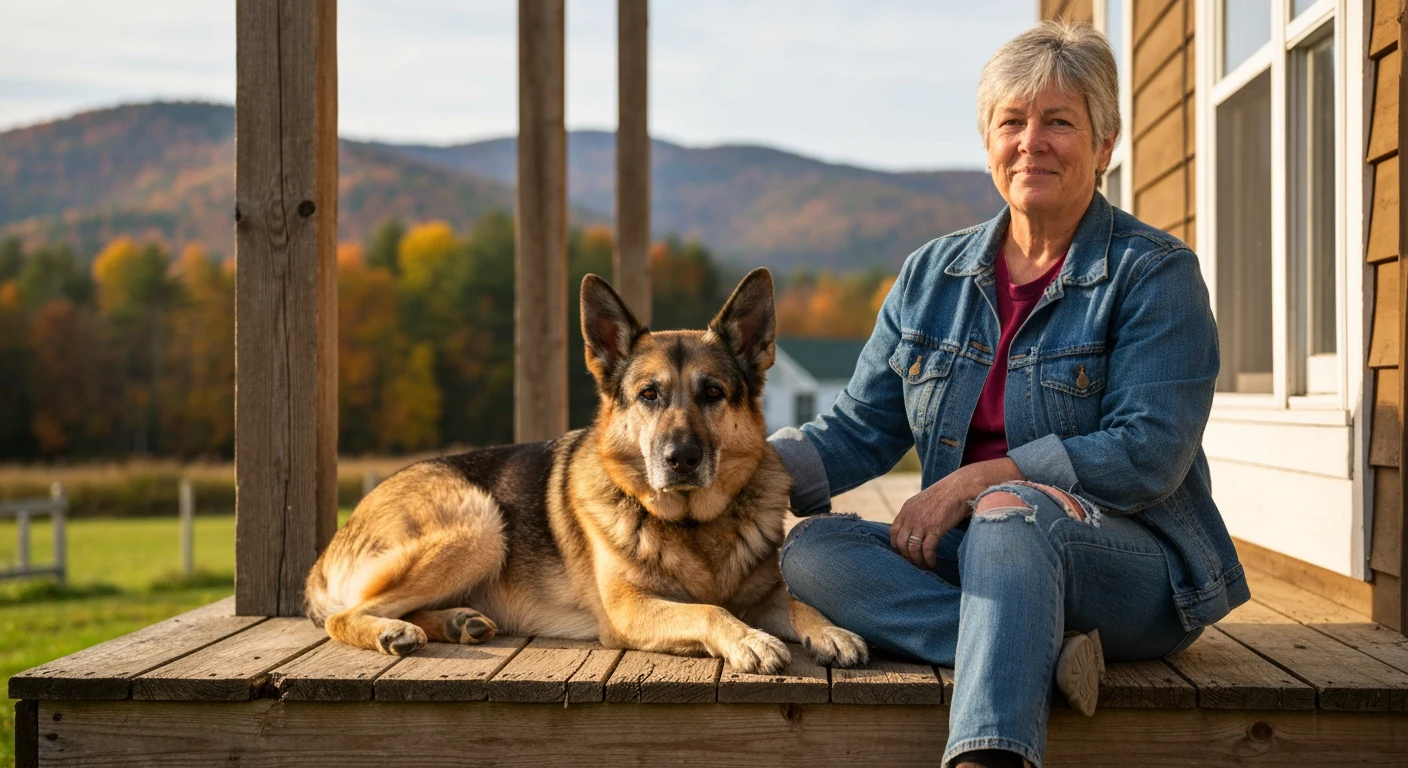
I’ll give you the short version up front, because everything else is just the reasoning behind it. In twenty-five years at Snowpeak, I cap most of my females at three to four litters. I never breed back-to-back. I retire on a fixed age, not on a “she still looks great” feeling. And I decide all of that before she’s ever bred, when I can still think clearly.
How Many Litters Is Actually Enough
The American Kennel Club will register litters from a bitch up to eight years old, and some registries allow even more litters than I’d ever consider. So the legal ceiling is not the welfare ceiling. They’re different numbers, and the gap between them is where dogs get hurt.
My working rule is four litters as a hard maximum, three as my comfortable default, and fewer if anything about her pregnancies or recoveries tells me to stop. Here’s the logic. A female’s first heat is too young — I never breed a first season, and rarely a second. That means her earliest sensible litter is around two years old, which is also when I finally have her hips, elbows, and eye clearances back and can breed her honestly. If I want her retired comfortably by five or six, the arithmetic only leaves room for three or four litters anyway, once you account for the recovery time between them that I’m about to describe.
People assume the limit is about wear on her body, and partly it is. But the bigger reason is genetic. If I keep going back to the same female because she’s proven and easy, I’m over-representing one bitch’s genes in my lines and shrinking my own gene pool. I learned that lesson the expensive way, and I wrote about the fallout in the genetic mistakes I made. Three or four litters from a great female, kept and bred forward through different daughters, does more for a program than seven litters from the same dam.
Why I Skip Heats and Never Breed Back-to-Back
Breeding back-to-back means breeding a bitch on consecutive heats with no skipped cycle in between. Some breeders defend it, and there’s even a fringe veterinary argument that two consecutive breedings followed by a long rest is easier on the uterus than spacing them out. I don’t do it, and here’s the practical reason.
A bitch coming out of a litter is depleted. She has fed six, eight, ten puppies for weeks. Her body weight, her coat, her bone density, her iron stores — all of it takes a real cycle to come back. When I skip the next heat entirely, I’m giving her roughly six to twelve months to rebuild before I even think about the following breeding. What I’m watching for during that window is simple and physical:
- Has she returned to her proper working weight and held it, not just hit it for a week?
- Has her coat fully blown out and grown back in clean condition?
- Are her energy and appetite back to her normal baseline, not the post-litter version?
- Did the previous whelp and the previous recovery happen without complications?
If the answer to any of those is “not yet,” she doesn’t get bred that cycle either. The skipped heat isn’t a fixed rule I apply blindly. It’s a minimum, and her body can extend it. Good record-keeping is what makes this judgment honest instead of sentimental — I track weight, condition, and recovery notes on every female every season, which is the whole point of the documentation habit.
Reading Recovery Between Cycles
Recovery is not just “did she survive the litter.” I’m looking at three things over the months between breedings.
The first is physical condition, which I covered above — weight, coat, energy. The second is reproductive health: a clean post-whelp check, no lingering discharge, normal subsequent seasons. A bitch who has a difficult whelp, a retained placenta, a mastitis episode, or a cycle that comes back irregular is telling me something, and the answer is more time or no more litters, not “let’s see.”
The third thing is the one breeders ignore, and it’s temperament. A female who comes out of motherhood anxious, clingy, or worn down in a way that doesn’t lift is not a candidate for another round. I breed for stable temperament in the puppies; I’m not going to manufacture it by stressing the dam who’s supposed to model it. If you want the long version of why a mother’s state matters to who the puppies become, it’s in the first eight weeks.
The Retirement Plan I Make Before Her First Litter
This is the part most breeders never do, and it’s the most important one. Before a bitch is ever bred, I’ve already decided three things and written them down.
I’ve decided her maximum number of litters. I’ve decided the outside age at which she retires no matter how good she looks — for me that’s six, occasionally pushed if a vet and I both agree she’s exceptional, but six is the number on the paper. And I’ve decided where she lives out the rest of her life, which is here, with me, spayed after retirement and treated as the family dog she earned the right to be. None of those decisions are made in the moment, because in the moment I am not trustworthy. None of us are.
Why write it down years early? Because the pull to get “just one more litter” is real and it’s strong, and it always arrives dressed up as a good reason. She whelps easily. The waiting list is long. A repeat of that last litter would be magnificent. The deposit money is sitting right there. Every one of those is true and every one of them is the exact moment a female’s welfare gets quietly traded away. A decision made in advance, when I had nothing to gain, beats a decision made the day her heat starts and I’m staring at a full waiting list.
So I let her retire on schedule, a little earlier than I’m permitted to, while she’s still sound and bright and could absolutely have done it one more time. That “one more time” I’m leaving on the table is not a loss. It’s the price of running a program I can stand behind, and of keeping a promise I made to a dog before she’d done anything to earn it — back when I could still think straight.